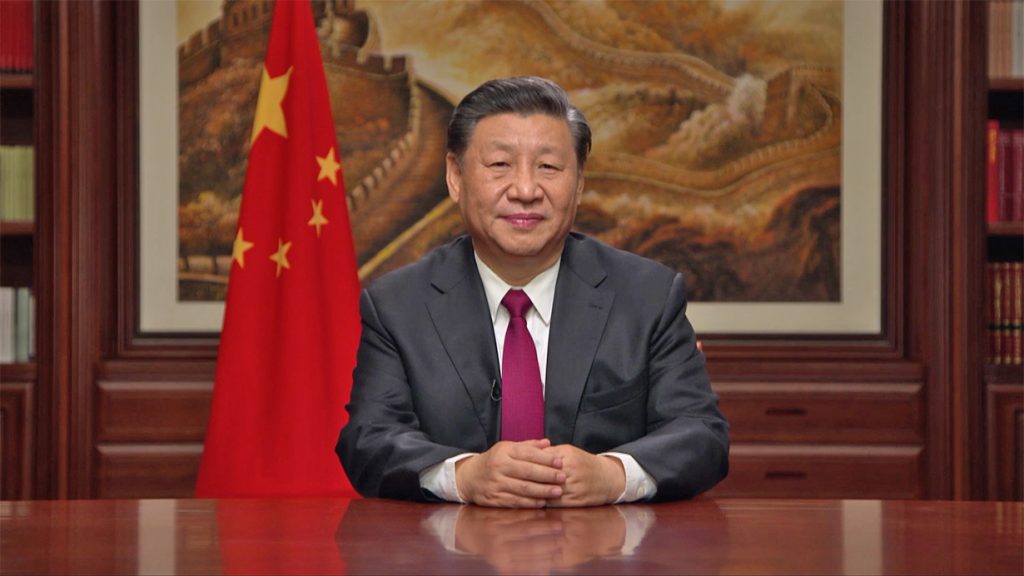
China has focused on emerging technologies, AI during its annual political meeting

China has sent a message of stability to the world while focusing on emerging technologies, particularly artificial intelligence (AI), during its largest annual political meeting. The joint annual session of China’s top legislative body, the National People’s Congress (NPC), and the top political advisory body, the Chinese People’s Political Consultative Conference (CPPCC), commonly called the “Two Sessions,” sets the country’s economic, political, and technological priorities.
While much of the world is preoccupied with conflicts in the Middle East, China has concentrated on long-term policies and development strategies. The NPC, China’s highest legislative body, formally approves laws, constitutional amendments, and the state budget, effectively endorsing decisions already shaped by the top leadership of the Chinese Communist Party.
This year’s session highlights China’s intent to project stability and reliability on the global stage. Under the leadership of President Xi Jinping, the government is focused on positioning China as a leading economic and technological power amid slowing growth.
A major focus of the session is the new “AI Plus” policy initiative, which aims to expand the use of artificial intelligence across industry, transportation, healthcare, and education. China plans to build its future economic growth around technology and innovation, while investing heavily in semiconductors, robotics, quantum computing, 6G communication, and brain-computer interfaces.
As part of its upcoming five-year plan, China intends to increase investment in science and technology, expanding AI applications across multiple sectors. Experts expect the “AI Plus” initiative to bring widespread changes from production systems to healthcare and education.
The government is also reshaping its economic structure. While past growth was driven mainly by real estate and infrastructure, China is now emphasizing innovation-driven and high-tech industries.
China has set a growth target of around 4.5 to 5 percent for the coming year, lower than in previous decades, signaling a moderation in economic expansion.
Additionally, the government is encouraging domestic consumption to reduce dependence on exports. However, challenges such as falling property prices, rising youth unemployment, and traditional savings habits make boosting spending difficult.
China is also expanding renewable energy production to reduce reliance on imported oil and gas, strengthening energy security through investment in green energy and domestic technology.
Overall, this year’s political meetings convey two key messages: one, China aims to project itself as a stable and long-term strategic power globally; and two, it seeks to lay the foundation for future economic growth by prioritizing AI and high-tech development.